Updated October 2026
Piercing requires the same care, skill, and attention to detail as any other form of body art, and getting it right starts long before the needle touches your client’s skin.
At Killer Ink, our roots are in tattooing, but piercing has always been part of the story, and we work closely with some of the biggest names in the industry, including Painful Pleasures, Neometal, and Anatometal, so everything we stock is backed by genuine piercing expertise.
Read on as we guide you through everything a professional piercer needs to know, from piercing tools and jewellery to hygiene and aftercare.
What Is A Body Piercing?
A body piercing is a puncture made through the skin using a needle to create an opening where jewellery can be worn. It's created in a way that allows it to heal into a permanent or semi-permanent opening that holds the jewellery in place.
Piercings can be done on most places on the body, including the ears, nose, lips, eyebrow, belly button, and nipples.
Different Types of Piercings


There are piercings for almost every part of the body, and it can help to have a basic understanding of the main types before you specialise:
- Ear piercings: Lobe, helix, forward helix, tragus, anti-tragus, conch, rook, daith, industrial, and snug.
- Nose piercings: Nostril, bridge and septum.
- Facial piercings: Eyebrow, dermal, and medusa.
- Mouth piercings: Tongue, labret, vertical labret, snake bite, Monroe, and Madonna.
- Body piercings: Navel, nipple, Christina, apadravya, and Prince Albert.
Some piercings are more straightforward to learn, like a standard lobe or nostril piercing, while others require a lot more training and experience before you should attempt them, so it's worth knowing the level of difficulty for each type before trying it.
Piercings by Difficulty
This is a general guide, based on things like how much anatomy varies from person to person, how easy it is to get the angle or depth wrong, and how likely a piercing is to reject or migrate if it's not placed exactly right. They're a helpful starting point, but you should always get hands-on training and experience before attempting any piercing.
| Piercing | Area | Difficulty |
| Lobe | Ear | Beginner |
| Nostril | Nose | Beginner |
| Labret | Mouth | Beginner |
| Helix | Ear | Beginner-Intermediate |
| Tongue | Mouth | Beginner-Intermediate |
| Navel | Body | Beginner-Intermediate |
| Forward Helix | Ear | Intermediate |
| Tragus | Ear | Intermediate |
| Conch | Ear | Intermediate |
| Septum | Nose | Intermediate |
| Eyebrow | Facial | Intermediate |
| Medusa | Facial | Intermediate |
| Snake Bites | Mouth | Intermediate |
| Monroe | Mouth | Intermediate |
| Madonna | Mouth | Intermediate |
| Nipple | Body | Intermediate |
| Anti-Tragus | Ear | Advanced |
| Rook | Ear | Advanced |
| Daith | Ear | Advanced |
| Industrial | Ear | Advanced |
| Snug | Ear | Advanced |
| Bridge | Nose | Advanced |
| Dermal | Facial | Advanced |
| Vertical Labret | Mouth | Advanced |
| Christina | Body | Advanced |
| Apadravya | Body | Advanced |
| Prince Albert | Body | Advanced |
The History of Piercing
Piercing has been around for thousands of years, and while it's becoming more and more popular over time, it's not a new trend and people across different cultures have been piercing their bodies for a long time.
Piercings didn't come from one single place or culture either, which is why they carry different meanings depending on where you go in the world.
- Otzi the Iceman: One of the earliest known examples, a mummified body around 5,300 years old, found with stretched ear piercings alongside tattoos.
- Ancient Egypt: Pharoahs were found buried with pierced ears. This is believed to be a sign of status and power.
- The Maya and Aztecs: Practised piercing lips and tongues as part of a religious ceremony.
The practice and what each piercing means have continued to evolve over time.
Essential Piercing Tools


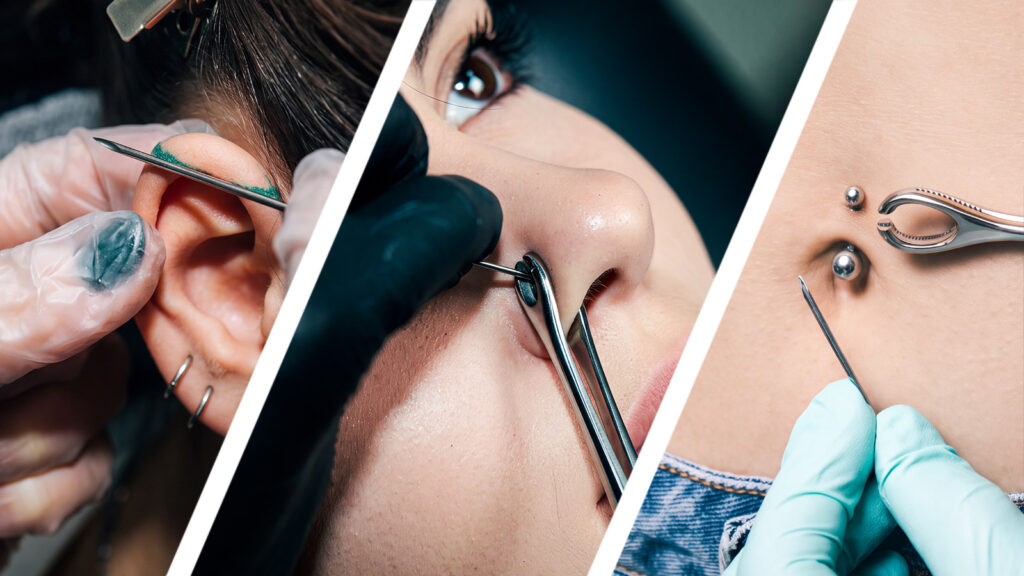
Piercing is about more than the jewellery. The needles, tools, and hygiene supplies you choose are equally as important and essential to ensuring a piercing is done safely and comfortably for your client. It also helps you build a good reputation as a professional piercer if your healed results can show your skill and knowledge. Here's a breakdown of what you'll need and what each piece is for:
- Needles
Most piercings are done with either a hollow needle or a cannula needle.
A hollow needle comes in different lengths, shapes, and gauges. It's slightly thicker than the jewellery going in, which allows a little room for swelling, and the hollow centre helps guide the jewellery through the new piercing.
A cannula needle works a bit differently. It comes with a small plastic tube that stays in the piercing after the needle itself is removed, giving you an easy channel to thread the jewellery through.
For larger piercings in areas with more cartilage, a dermal punch might be used instead of a needle. These have a thicker, hollow tip, designed to remove a small amount of tissue cleanly.
Our range of piercing needles includes cannula and hollow variations as well as dermal punches, so you can choose what you need based on your preferences.
Standard Gauges for Common Piercings
| Piercing | Area | Standard Needle Gauge |
| Lobe | Ear | 18g-20g |
| Helix | Ear | 16g-18g |
| Forward Helix | Ear | 16g-18g |
| Tragus | Ear | 16g-18g |
| Anti-Tragus | Ear | 16g-18g |
| Conch | Ear | 16g-18g |
| Rook | Ear | 16g-18g |
| Daith | Ear | 16g-18g |
| Industrial | Ear | 14g |
| Nostril | Nose | 18g-20g |
| Septum | Nose | 14g |
| Eyebrow | Facial | 14g |
| Dermal | Facial | 14g-16g (sometimes 12g) |
| Lip | Mouth | 16g |
| Medusa | Facial | 16g |
| Tongue | Mouth | 14g |
| Monroe | Mouth | 16g |
| Navel | Body | 14g |
| Nipple | Body | 14g |
- Tools
Forceps, also called clamps, hold the skin steady and in the right position while you pierce, which makes the whole process safer for both you and your client. Different shapes suit different areas of the body: Pennington clamps have a triangular eyelet and work well for most piercing types, while Foerster clamps have a round eyelet, better suited to tongue and navel piercings.
If you're looking to build out your collection of piercing tools, Aces Supply is worth a look. They're a piercer-owned company that make sustainable, high-quality, single-use equipment, covering everything from disposable hand tools and tapers to reusable containers and SteriSonic boxes for cleaning between uses. It’s a great way to keep your studio safe, eco-friendly, and hygienic.
- Jewellery
Choosing the right jewellery is just as important as choosing the right needle. What works best comes down to a mix of things, like where the piercing is, the client themselves, and whether they've got any allergies to consider. A stud might be perfect for one placement, while a ring, barbell, or labret-style piece suits another piercing better. And it's not just about shape either, material is important too. Titanium tends to be safer for a fresh, healing piercing, whereas something like gold is better for once a piercing has settled down.
Tilum has a selection of jewellery for any piercing and any style, with 14kt gold and titanium options that are hypoallergenic and skin-safe. Every piece is built to last, and finished to a high polish, so whatever you're working on, you'll find something that fits.
Piercing Hygiene and Aftercare
Hygiene and aftercare are essential before, during, and after every piercing. It helps ensure they heal correctly and reduces the risk of any complications and infections.
- Hygiene
While you can pierce with only disposable tools and equipment, many professional piercers benefit from buying reusable equipment and then sterilise everything before use. You can do this with an ultrasonic cleaner and autoclave, alongside sterilisation pouches to keep everything sealed until it's needed.
You'll also need the basics: single-use gloves (nitrile options are good for those with latex allergies), a clean, sanitised work surface, and any other essential personal protective equipment.
- Aftercare
Making sure your clients follow a good aftercare routine is just as important as the piercing itself.
Recovery offers a simple, trusted range: their Sea Salt and Saline Wash Spray are great everyday options for soothing and keeping a piercing clean, and their Mouth Rinse is perfect for any oral piercings.
For a wider range of aftercare essentials, Otzi's Easy Piercing collection features cleansing gels and a hygienic spray, ideal for pointing clients towards once they leave your studio.
FAQS
What is a piercing needle used for?
A piercing needle creates the initial opening in the skin so that jewellery can be inserted. It's hollow, allowing the jewellery to pass through the opening left behind once the needle's removed.
What is a helix piercing?
A helix piercing sits through the upper cartilage of the ear, along the outer rim. It's one of the most popular ear-piercing types and can be worn with a stud, ring, or clicker.
What is a septum piercing?
A septum piercing passes through the thin strip of tissue between the nostrils. It's usually worn with a clicker or horseshoe-style ring, both of which can be flipped up and hidden if needed.
What's the difference between an autoclave and an ultrasonic cleaner?
An ultrasonic cleaner removes debris and dirt from equipment using sound waves in a cleaning solution, it's a pre-cleaning step, not sterilisation. An autoclave uses high-pressure steam to actually sterilise equipment, killing bacteria, viruses, and spores. Most studios use both: ultrasonic cleaning first, then autoclaving to sterilise.


